 Ultimate guide
Remote Heavy Equipment ECM Programming Explained
Last Updated: October 25, 2026
Quick Summary
Remote heavy equipment ECM programming is the process of updating, calibrating, or recovering an engine control module without physically removing it from your machine. A certified technician connects to your electronic control module through a secure interface and makes necessary adjustments from a distance, eliminating transport waits and on-site scheduling while preserving your original software.
- Remote programming typically delivers same-day or next-day turnaround on supported platforms versus multi-day ship-in service.
- Supported equipment includes heavy-duty trucks, excavators, loaders, graders, dozers, and industrial machinery from Cummins, Paccar, Mack, Volvo, and Caterpillar.
- The process requires diagnostic adapters, interface cables, manufacturer-specific diagnostic software, and correct firmware files matched to your exact ECM serial number.
- Remote service reduces equipment downtime to the programming window only, typically 30 minutes to a few hours, versus removal and reinstallation time.
- Compare total cost of ownership across deposit, labor, shipping, downtime, and repeat-programming charges rather than programming fee alone.
Table of Contents
- What Remote ECM Programming Is and Why It Matters
- How Remote ECM Programming Works in Practice
- Remote ECM Programming Service Options and Delivery Models
- ECM Programming Tools and Cables You Need
- Bench ECM Programming Versus Remote Access
- ECM Programming Cost and Turnaround Time
- Getting Your Equipment Calibrated
- Frequently Asked Questions
What Remote ECM Programming Is and Why It Matters
Remote heavy equipment ECM programming is the process of updating, calibrating, or recovering an engine control module without physically removing it from your machine.
At Construction Calibrations, we've seen fleet managers across construction, mining, and agriculture face the same challenge: equipment downtime costs money. A single day without a critical excavator or grader can cascade into project delays and lost revenue.
The real value isn't just convenience. Remote programming preserves your original software before any changes, maintains compatibility with existing emissions hardware, and delivers confirmed calibrations backed by diagnostics specific to your exact module. It scales across multiple states or international operations without the logistics of physical transport.
How Remote ECM Programming Works in Practice
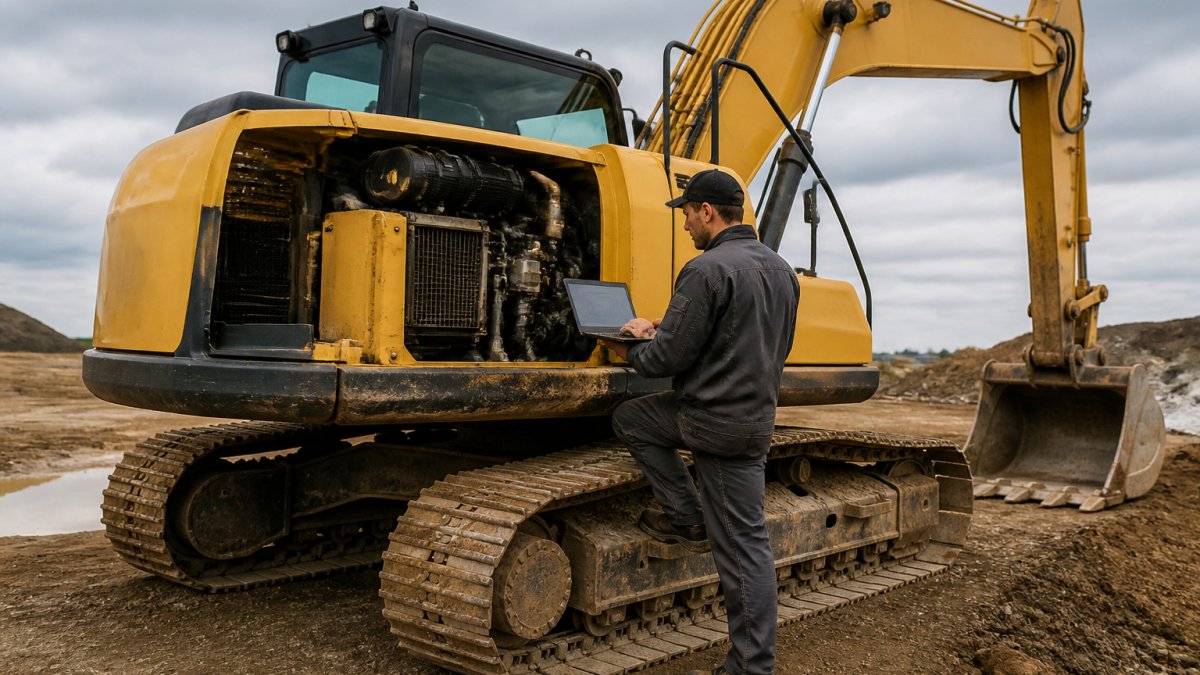
The process starts with a diagnostic connection. Your equipment connects to a technician through a secure remote interface using industry-standard adapters and cables.
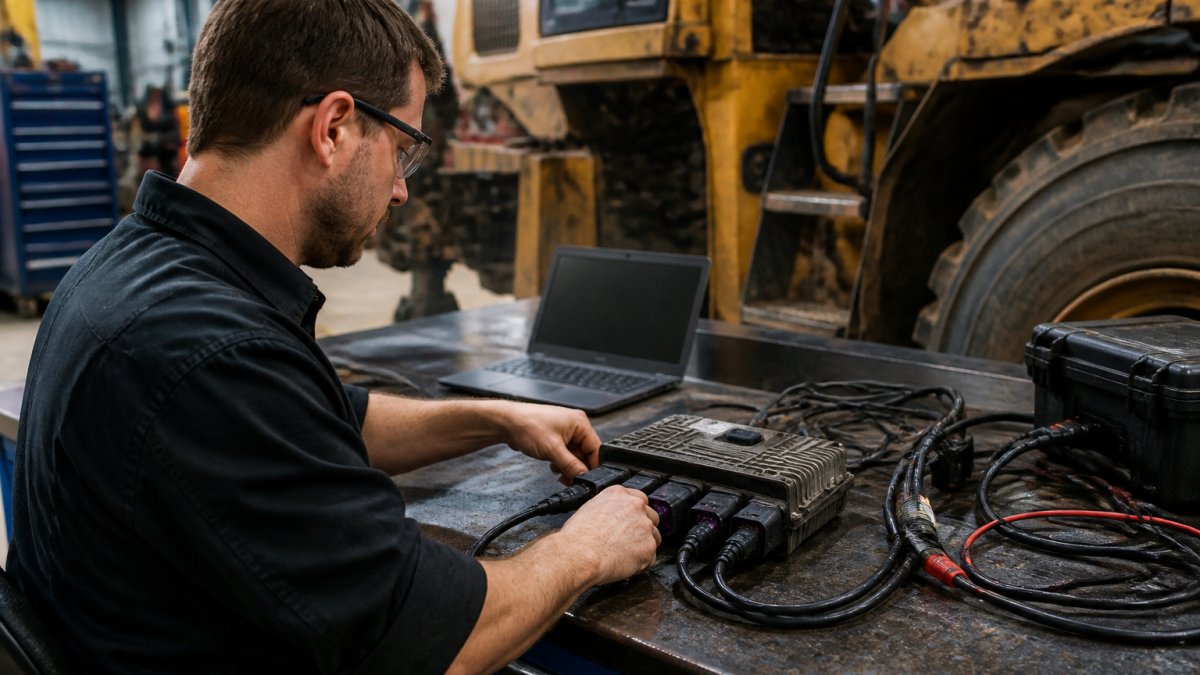
Once diagnostics are complete, the technician backs up your original firmware, a critical recovery path if anything goes wrong.
The workflow happens remotely, but it's not passive.
Supported equipment includes heavy-duty trucks, excavators, loaders, graders, dozers, and other industrial machinery from manufacturers like Cummins, Paccar, Mack, Volvo, and Caterpillar. However, not all platforms support remote programming.
Remote ECM Programming Service Options and Delivery Models
Several service delivery methods exist for remote heavy equipment ECM programming, and the right choice depends on your operational setup and equipment access.
Direct remote connection is the most straightforward approach.
Rental kit delivery is another common model. A provider ships a diagnostic kit with the necessary adapters, cables, and interface hardware.
For fleet operations with multiple machines across multiple locations, fleet programs often combine remote programming with scheduled maintenance windows, allowing you to batch calibrations and reduce per-unit service costs.
The key differentiator is turnaround time and convenience. Remote service typically delivers same-day programming on supported platforms, versus multi-day ship-in turnaround or on-site scheduling complexity.
ECM Programming Tools and Cables You Need
Remote heavy equipment ECM programming lives or dies on the physical and software link between your machine and the technician.
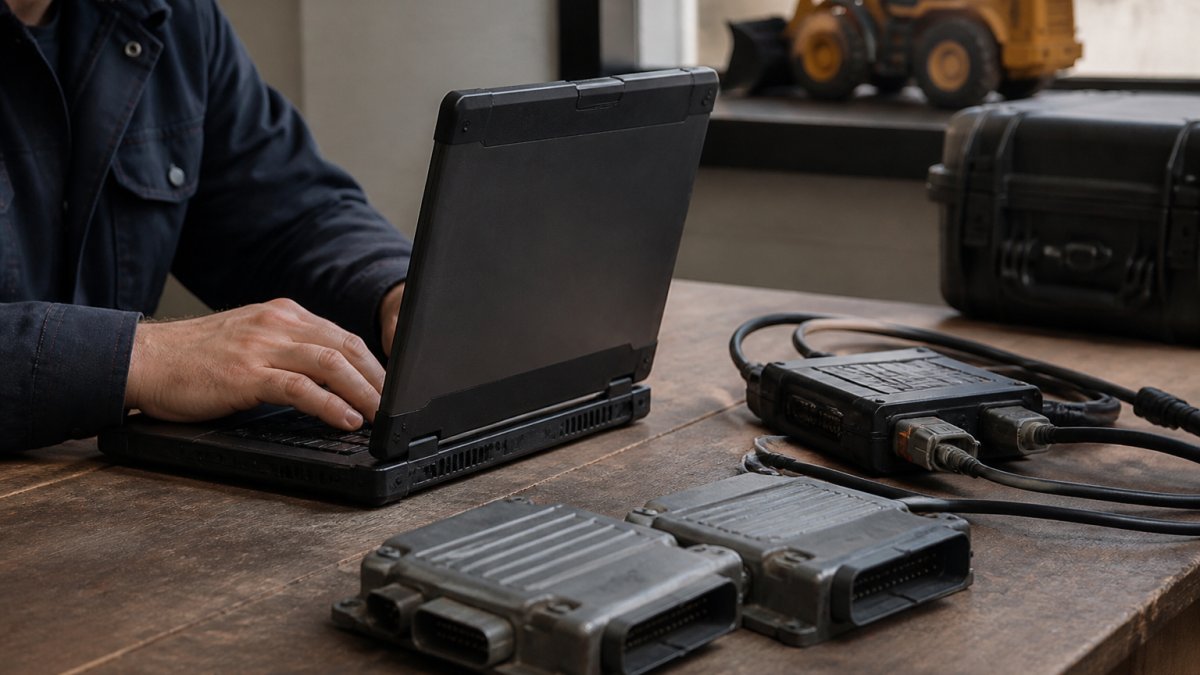
Diagnostic adapters are the bridge between your electronic control module and the technician's interface. They vary by manufacturer and control-module type.
Interface cables carry the diagnostic signal from your equipment to the programming device.
Diagnostic software runs on the technician's workstation and communicates through the adapter and cable. It reads fault codes, displays live parameters, uploads calibrations, and verifies success.
Firmware and calibration files are the programming data loaded onto your module, engine parameters, emissions logic, and control algorithms specific to your make, model, and configuration.
Compatibility and Supported-System Lookup
Use this matrix to narrow down what your machine likely needs before you request a quote. It is a starting point, not a guarantee, final confirmation always comes from a quote against your ECM serial number.
| Equipment type | Typical engine families | Common model-year range | Typical ECM/control module | Interface / adapter class |
|---|---|---|---|---|
| Heavy-duty trucks (Class 7-8) | Cummins ISX/X15, Paccar MX, Mack MP, Volvo D-series | 2007-present | CM2350, CM871, ACM, EMS2/EMS3 | J1939 9-pin or 16-pin; OEM-specific breakouts |
| Excavators | Cummins, Isuzu, Yanmar, Volvo | 2011-present | OEM ECM with J1939 backbone | J1939 9-pin; OEM service connector |
| Wheel loaders | Cummins, Perkins, Deutz | 2010-present | OEM ECM; some use separate transmission ECU | J1939; OEM-specific adapter |
| Motor graders | Cummins, Cat | 2007-present | OEM ECM | J1939; Cat-specific connector where applicable |
| Dozers | Cat, Cummins | 2008-present | OEM ECM | Cat-specific or J1939 |
| Agricultural tractors | Cummins, John Deere, AGCO | 2011-present | OEM ECM; ISOBUS on some models | J1939; ISOBUS where supported |
How to read it: match your equipment type first, then your engine family and model year. If your module appears in the fourth column and your machine has the interface in the fifth, remote programming is likely feasible. If your model year predates the range shown, or your ECM is not listed, treat remote service as unconfirmed until a provider checks your serial number.
If your machine falls outside the matrix, the safe path is a bench service or an on-site technician rather than forcing a remote session. Confirm fit first; program second.
Bench ECM Programming Versus Remote Access
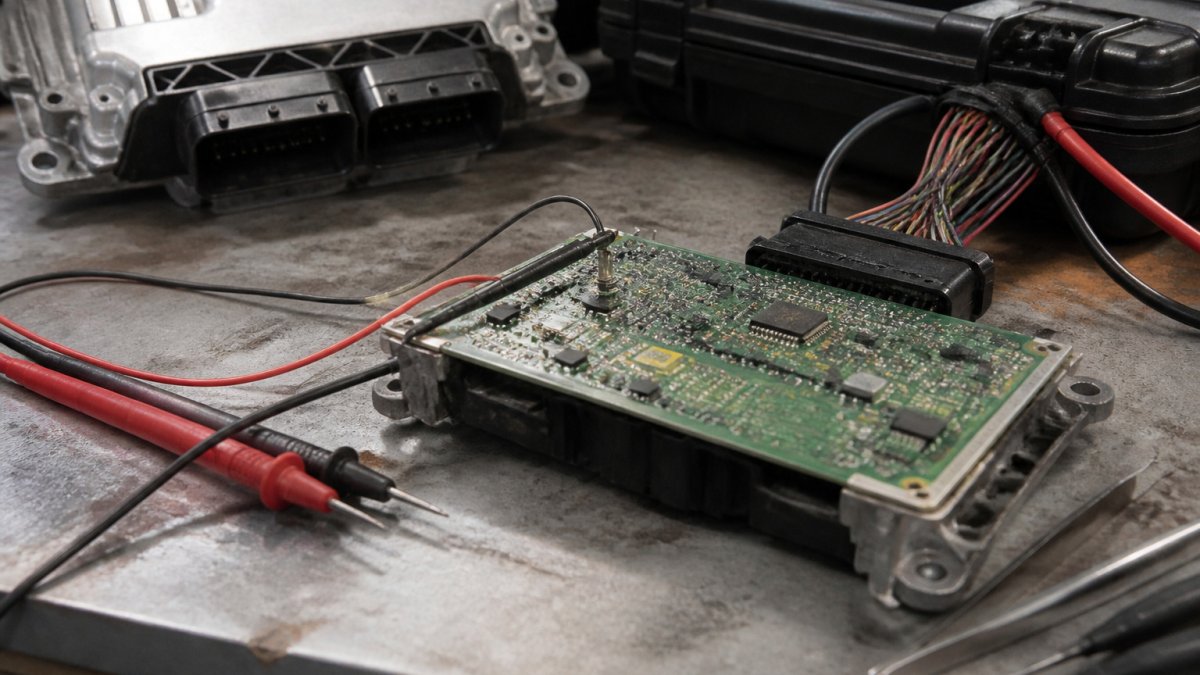
Bench ECM programming removes the module and brings it to a service facility, where the technician connects it to a workstation, runs diagnostics, and uploads new calibrations in a controlled environment.
Remote ECM programming keeps your module installed and establishes a secure connection from a distance.
For most fleets, remote programming is faster and more practical because it reduces downtime. Your equipment stays operational except during the actual programming window, which typically takes 30 minutes to a few hours depending on the scope of work.
ECM Programming Cost and Turnaround Time
The useful question isn't whether remote is cheaper in the abstract, but which delivery model costs least for your specific machine, location, and urgency once deposits, labor, shipping, turnaround, and repeat-programming charges are counted. The variables below let you compare quotes apples to apples.
What Drives the Price
Pricing for remote heavy equipment ECM programming depends on four things: module complexity, scope of calibration changes, whether recovery work is needed, and your equipment's make and model. A straightforward calibration update costs less than recovering a corrupted or mis-programmed module. International access setup or rental-kit shipping can add to the total, but remote delivery generally avoids the transportation and facility overhead of bench service.
Total-Cost Comparison by Delivery Model
| Cost factor | Remote (direct connection) | Rental kit | On-site technician | Ship-in / bench |
|---|---|---|---|---|
| Typical deposit | Quote-based; often none beyond approval | Kit deposit or rental hold common | Scheduling deposit common | Module deposit common |
| Labor | Per-module programming labor | Programming labor plus kit rental | Labor plus travel time | Bench labor plus handling |
| Shipping | None for the module | Round-trip kit shipping | None for module; travel charged | Round-trip module shipping and insurance |
| Equipment downtime | Programming window only (often 30 min-a few hours) | Programming window plus kit transit | Scheduling wait plus visit | Removal, transit, bench time, reinstall |
| Turnaround | Often same-day or next-day on supported platforms | Kit transit plus session | Depends on technician availability | Multi-day to multi-week |
| Repeat-programming charges | Confirm per-session or per-revision policy | Confirm kit re-rental and re-session fees | Confirm return-visit fees | Confirm re-bench and re-ship fees |
| Best fit | Stationary, accessible machine with reliable connectivity | Geographically dispersed fleets | Sites without reliable remote connectivity | Severely corrupted modules or no remote access |
How to use the table: ask each provider to quote against the same row set. A low headline programming fee can hide kit shipping, travel, or repeat-session charges, and those are exactly the lines competitors tend to leave vague.
Turnaround Reality Check
On supported platforms, remote turnaround is often same-day or next-day. Once diagnostics confirm compatibility and the quote is approved, programming begins immediately and most sessions complete within a few hours. Bench service adds removal, transit, bench queue, and reinstallation; on-site service adds scheduling and travel. For a critical machine, the downtime difference usually outweighs the labor difference.
Getting a Confirmed Quote
For exact pricing and service-level commitments, request a confirmed quote against your specific ECM before programming begins. Provide make, model, year, engine specifications, and the ECM serial number if accessible. That lets you compare remote, rental-kit, on-site, and bench options on the same basis. Where a provider cannot confirm compatibility, treat the quote as provisional and plan a fallback delivery model.
Getting Your Equipment Calibrated
Starting the remote ECM programming process is straightforward. Gather your equipment's make, model, year, and engine specifications, plus the ECM serial number if accessible.
Contact a remote programming service provider and request a quote.
Once you approve the quote, the provider ships the diagnostic kit or arranges remote access credentials. Follow the connection instructions, establish the remote session, and remain available during programming.
After programming completes, your equipment is ready to return to service.
Remote heavy equipment ECM programming eliminates the downtime penalty of traditional service methods while preserving your original software and maintaining emissions compliance.
Frequently Asked Questions
What is remote ECM programming for heavy equipment?
Remote ECM programming allows technicians to recalibrate your equipment's electronic control module (ECM) without removing it from the machine. Instead of shipping the module or bringing equipment to a shop, a certified technician connects to it remotely, adjusts engine parameters, and uploads new firmware. This approach minimizes downtime and works on supported platforms like Cummins, Paccar, Mack, Volvo, and Caterpillar engines. Calibrations can optimize power output, fuel efficiency, or recover modules that failed during a previous flash.
How does remote ECM programming differ from bench ECM programming?
Bench ECM programming removes the module from your equipment and recalibrates it on a workbench using diagnostic software and specialized cables. Remote programming keeps the module in place and uses secure remote access to apply the same calibration changes. Bench programming offers more control and is necessary when a module is completely non-functional or needs advanced recovery. Remote programming saves time and avoids shipping costs when the equipment can communicate with diagnostic software. Both methods back up original software and apply custom configurations tailored to your engine and emissions hardware.
Can you program an ECM without removing it from the equipment?
Yes, on supported platforms. Remote ECM programming requires no ECM removal and same-day service is available for compatible equipment. However, compatibility must be confirmed before selecting remote service, as not all makes, models, or years support remote access. If your equipment cannot communicate remotely or the module is severely damaged, bench programming becomes necessary. Always verify your specific engine make and model against the provider's supported equipment list before committing to remote service.
What equipment and software do I need for remote ECM programming?
Remote ECM programming requires diagnostic software compatible with your engine control module, a secure internet connection, and specialized interface cables that connect your equipment to the technician's workstation. The provider typically supplies or specifies the exact cables and software needed based on your engine make and model. You do not need to purchase software yourself; the service provider manages all tools and handles the remote connection securely. Supported equipment includes heavy-duty trucks, excavators, agricultural machinery, and industrial equipment from major manufacturers.
How long does remote ECM programming actually take?
On supported platforms, remote ECM programming can be completed the same day once the secure connection is established. The actual calibration process typically takes 30 minutes to 2 hours depending on the complexity of the changes and the module's condition. Turnaround time depends on whether the module needs recovery, how many parameters require adjustment, and current service demand. Always request a confirmed turnaround estimate before shipping or scheduling remote access, as severely damaged modules or custom configurations may require longer bench programming.
Is remote ECM programming safe for construction and mining equipment?
Remote ECM programming is safe when performed by certified technicians using verified calibrations backed by original software recovery. Professional providers back up your module's original software before any changes, allowing recovery if issues arise. Remote programming works within your equipment's existing emissions hardware, so it does not compromise DPF, EGR, SCR, or other emissions systems. The real risk comes from unverified tuning or working with uncertified providers. Always confirm the provider backs up original software, offers recovery services, and provides a warranty on calibrations applied.