 How-to
7 Diesel Calibration Steps for Farm Equipment Performance
Last Updated: November 24, 2026
Quick Summary
Diesel calibration is the process of adjusting an engine control module so the engine runs the way a specific farm machine needs it to. Calibration changes the software values for fuel delivery, timing and airflow, not the hardware. Safe work starts with diagnosis, backs up the original file, changes one set at a time and measures results under real load.
- Diagnose faults and check mechanical health before changing any calibration settings.
- Back up the original calibration file and store at least two copies before making changes.
- Change one parameter group at a time, then test before moving to the next.
- Measure power, fuel use and exhaust temperature before and after, under the same conditions.
- Keep emissions hardware in place and working, because noncompliant calibrations can create legal and warranty problems.
Table of Contents
- Why Tractors, Combines and Other Farm Machines Need Different Calibrations
- Diagnosing the Problem Before Any Calibration
- The Diesel Engine Calibration Process, Step by Step
- Diesel Injector Calibration and Injection System Checks
- Tractor ECM Tuning, Fuel Efficiency and Emissions Compliance
- Planning Your Next Calibration for Farm Equipment Fuel Efficiency
- Frequently Asked Questions
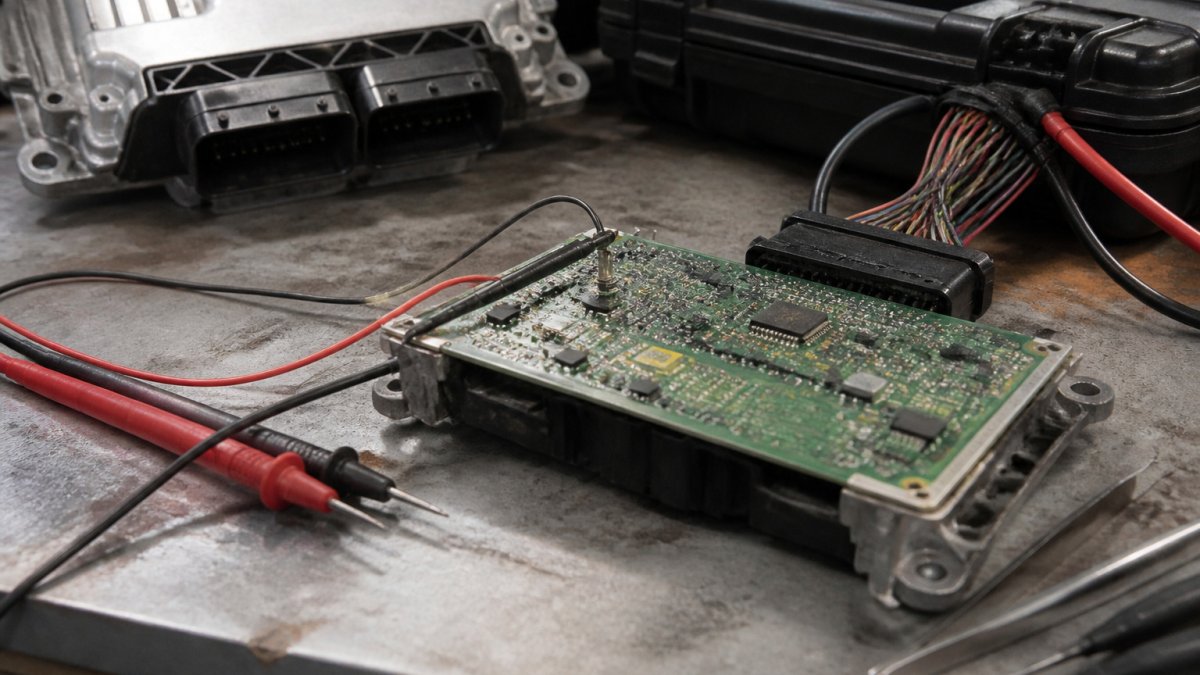
Diesel calibration is the process of adjusting an engine control module (ECM) so the engine runs the way a specific machine needs it to. The steps below outline how diesel engine calibration for agricultural equipment is approached, including every stage of the diesel calibration workflow.
Diesel powers more than two-thirds of farm equipment, according to the Engine Technology Forum report, "Powering America's Farms Into the Future". That makes engine settings a direct part of how a farm gets its work done. A calibration can change how much power the engine makes, how it delivers fuel and how it handles load, so the goal is a setting that fits the job.
The ECM controls fuel delivery, timing and airflow. Calibration changes the values it uses, not the hardware itself. The results depend on the machine, the engine and the work it does.
Why Tractors, Combines and Other Farm Machines Need Different Calibrations
A tractor pulling a plow faces a very different load than a combine threshing grain. One size does not fit all. According to MHPD's guidance on diesel tuning for agricultural equipment, no two diesel applications demand the same work from their engines, so a generic setting may not suit a given machine.
Tractors often need steady torque under changing loads in the field. Combines run long hours with heavy, variable loads and often operate in dusty, heavy-soil conditions. A setting that works well for one can cause trouble on the other.
Model matters too. The same engine family can be installed in several machines with different duty cycles, implements and cooling setups. Before any work starts, confirm the exact machine and what it does every day.
Diagnosing the Problem Before Any Calibration
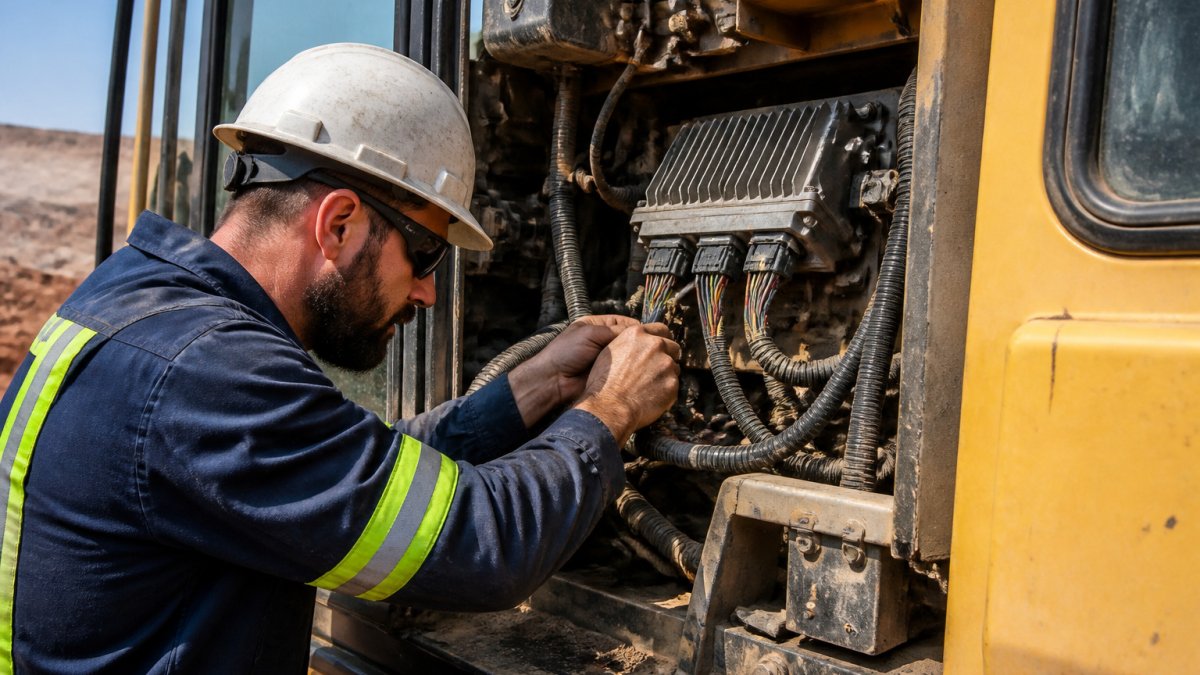
Calibration should not be the first step. Many problems that look like a tuning issue are really a fuel system, air or component issue. Start by asking the operator what changed, when it started and under what load it shows up.
Check for:
- Active or stored fault codes
- Unusual smoke color under load
- Loss of power on hills or with a full implement
- Rough idle or hard starting
- Higher fuel use than normal for the same work
Clear diagnosis first saves time and money. Calibrating an engine with a failing injector or a clogged air filter will not solve the real problem.
The Diesel Engine Calibration Process, Step by Step
A safe calibration follows a clear order, and the order matters as much as the changes themselves. The process below is the one our team uses on tractors, combines and other farm machines. It starts with confirming the machine is healthy enough to calibrate and ends with measured proof that the change did what it was supposed to do.
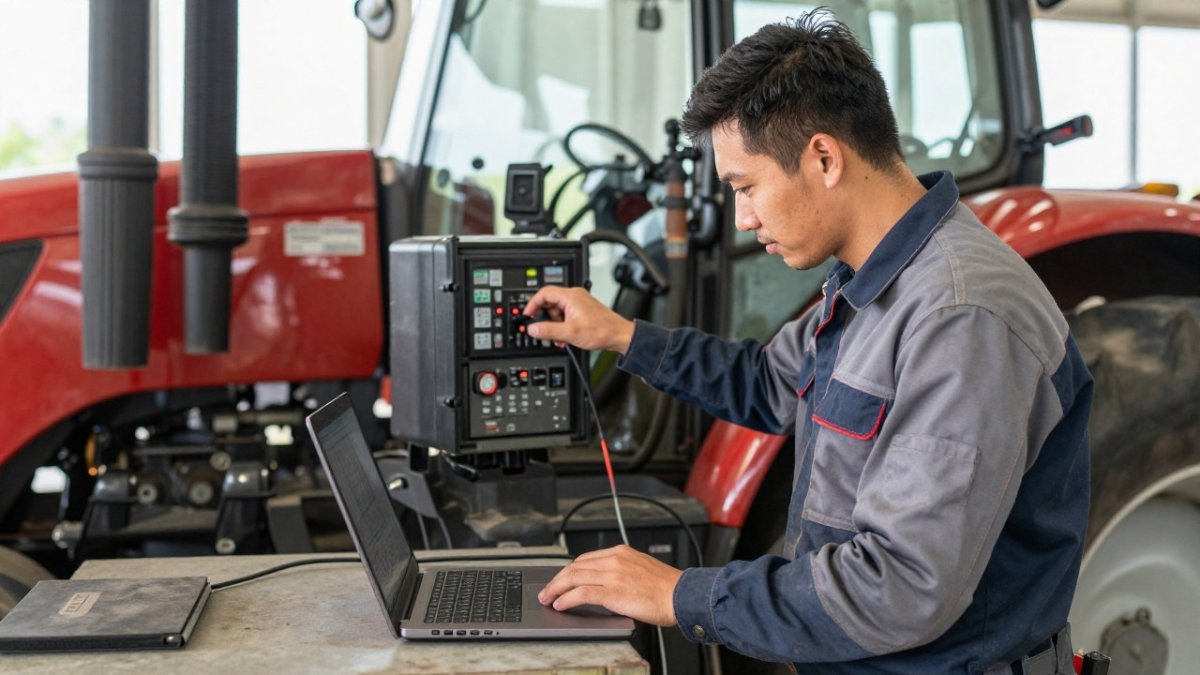
- Confirm the machine, engine and ECM part details. Record the serial number, engine family, ECM part number and current calibration file identifier. This is your baseline for every later step.
- Run a diagnostic scan and record all active and stored fault codes. Do not clear codes yet; they are evidence of what the machine was doing before you touched it.
- Confirm the engine is mechanically sound before changing software. Check fuel quality and delivery, air filter restriction, intake and exhaust restrictions, sensor readings and injector balance. A calibration cannot fix a mechanical fault, and applying one on top of a fault can make diagnosis harder later.
- Back up the original calibration file. Read the file from the ECM and save it with the machine serial number and date. Store at least two copies, one on a separate drive or cloud folder.
- Make the planned changes, one set at a time. Change one parameter group, test, then move to the next. Changing several things at once makes it impossible to know which change caused a result.
- Test under real working conditions and measure results. Use the same field, implement and load for before-and-after runs so the comparison is fair.
- Save the final file and document every change. Record the file identifier, the parameters changed, the measured results and any fault codes that appeared during testing.
Each step matters, but two are where most problems start. Skipping the backup leaves no clean way to return the machine to its previous state. Skipping real-load testing means the first time the new setting sees full load may be in the middle of harvest.
Pulling the Original Calibration and Making a Backup
Before anything changes, read the original calibration from the ECM and save it. Keep the backup in a safe place with the machine's serial number and date. If a new setting causes a problem, a clean backup lets you return the machine to its previous state.
Store at least two copies. One should live on a separate drive or cloud folder. This is the step that protects the operator and the machine.
Watch out: a backup that was never verified by reading it back is not a backup. Confirm the saved file opens and matches the ECM identifier before you write any changes.
Measuring Before and After Results
Measure the machine before and after the change. Record power output, fuel use, exhaust temperature and any fault codes. Use the same work and the same field conditions for both tests so the comparison is fair.
A practical baseline includes engine speed at rated load, boost pressure, fuel rate, exhaust gas temperature and any stored codes. After the change, repeat the same measurements under the same conditions. Write the numbers down. A calibration without measured results is a guess. With measured results, you can show whether the change helped and decide what to adjust next.
Most practitioners find that a simple log with date, machine hours, ambient temperature and implement used is enough to make the before-and-after comparison meaningful. Without that record, a seat-of-the-pants impression is all you have, and that is not enough to judge a calibration on a machine that works every day.
The seven steps below summarise the order of work, with what to do at each stage.
| Step | What to do | Timing |
|---|---|---|
| 1. Confirm details | Record serial number, engine family, ECM part number and calibration file ID | Baseline before any work |
| 2. Scan for codes | Record active and stored fault codes; do not clear them yet | Before any change |
| 3. Check mechanics | Inspect fuel quality, air filter, restrictions, sensors and injector balance | Before changing software |
| 4. Back up file | Read and save original calibration; keep at least two copies | Before any change |
| 5. Change one set at a time | Adjust one parameter group, then test before the next | Each change |
| 6. Test under load | Measure before and after in the same field, implement and load | Real working conditions |
| 7. Save and document | Record file ID, parameters changed, results and codes seen | Final step |
Diesel Injector Calibration and Injection System Checks
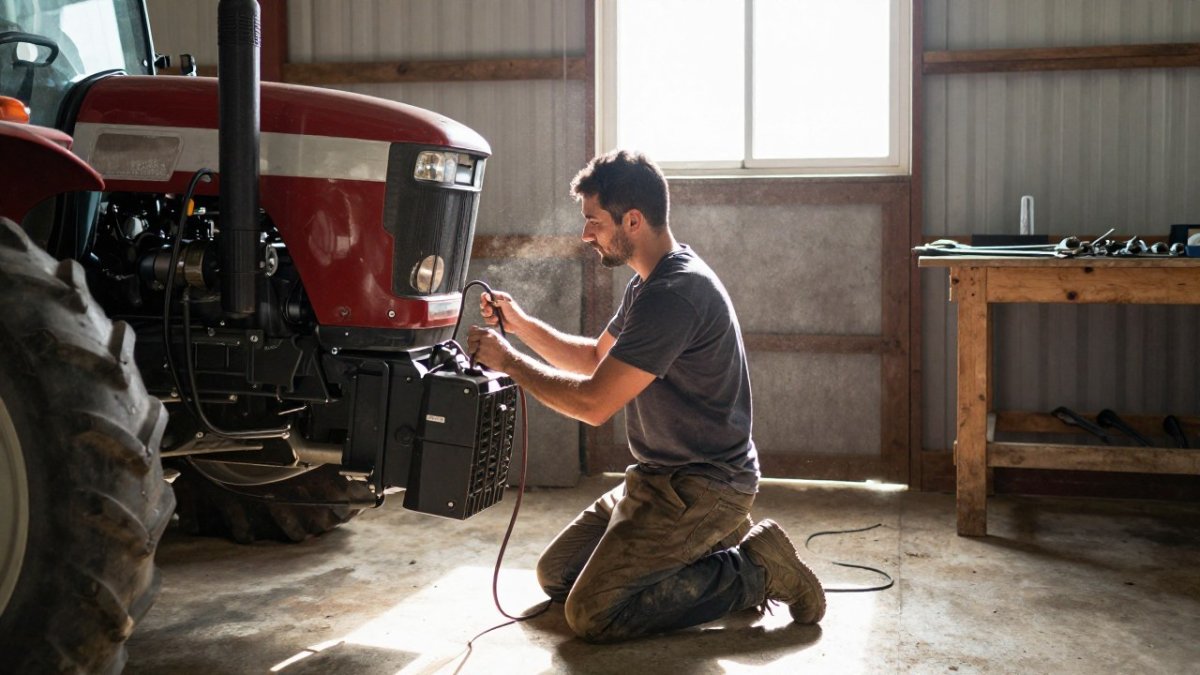
Injector calibration and the broader injection system are separate from the ECM. Injectors can wear, clog or drift out of spec, and a software change will not fix a worn injector.
According to Diesel Fuel Injection Repair's guidance on agricultural injector and pump service, a specialist should confirm whether testing, cleaning, repair, rebuilding or calibration is the right next step before any work begins. That assessment should come first.
Check the injectors and the injection pump before you change the ECM. If a component is worn, repair or replace it first, then calibrate the engine to match.
Tractor ECM Tuning, Fuel Efficiency and Emissions Compliance
Tuning the ECM can improve fuel efficiency when the setting matches the real work. It can also affect emissions, and that is where the legal and warranty side of calibration becomes part of the decision rather than an afterthought.
Emissions rules apply to nonroad diesel engines used in agricultural equipment. The U.S. Environmental Protection Agency's regulations for nonroad diesel engines set the standards that matter here. Those standards apply to the engine as certified, and changes that remove or bypass emissions equipment, or that alter the certified calibration in ways that increase emissions, can create legal and warranty problems for the owner and the shop.
A compliant calibration works with the existing emissions hardware, not around it. That means the diesel particulate filter, selective catalytic reduction system, exhaust gas recirculation and their sensors stay in place and functional. The calibration changes how the engine manages fuel, timing and airflow within the range the hardware can support.
Watch out: a setting that improves fuel use on a test run but pushes exhaust temperature or emissions out of the range the aftertreatment system can handle is not a win. It can shorten component life and create fault codes that strand the machine at the worst possible time.
Calibrating for fuel efficiency means balancing power, fuel use and emissions. A tractor that spends most of its time on tillage needs a different setting than one used for hauling, and the emissions hardware has to keep working in both cases.
Planning Your Next Calibration for Farm Equipment Fuel Efficiency
Plan calibration around the work you do most. A tractor that spends most of its time on tillage needs a different setting than one used for hauling. Set goals first: more usable power, better fuel use or fewer stoppages.
Keep a record of each calibration, including the backup file, measured results and any follow-up changes. For the broader benefits of engine tuning, see fuel, power and uptime gains from engine tuning. This history helps when you service the machine later or replace the engine.
If you want to read more before you plan, our guides on improving fuel efficiency in heavy machinery and on heavy equipment engine tuning cover fuel, power and uptime benefits in more depth.
For current options on tractor, combine and other farm machine tuning, visit our site page for case IH tractors, tractor tuning options for John Deere ag tractors, or combine calibration options for John Deere combines. To get a quote for your machine, go to https://constructioncalibrations.com/.
Frequently Asked Questions
What does diesel engine calibration mean for agricultural equipment?
Diesel engine calibration means adjusting the engine control module's settings, such as fuel delivery timing, injection quantities, boost targets and torque limits, so the engine matches the work the machine actually does. Agricultural engines run under heavy loads, large implements and variable soil conditions, so a calibration suited to a road truck may not suit a tractor pulling a plough. Good calibration aims for usable power, steady fuel use and reliable operation within the engine's emissions and design limits.
Can ECM tuning improve fuel efficiency in farm equipment?
ECM tuning can improve fuel efficiency when the original settings do not match a machine's real duty cycle, but results depend on the application and the engine. Gains should be measured with before-and-after data on fuel use under the same workload, not assumed. Improvements that come from raising power output can also increase fuel burn, so the goal should be efficiency at the required output rather than maximum horsepower alone.
Does calibration affect emissions compliance or a machine's warranty?
Yes. Changes to fuel delivery, boost or exhaust-related settings can affect emissions controls, and the EPA regulates nonroad compression-ignition engines used in agricultural machinery. Modifications may also affect manufacturer warranty coverage. Before any calibration, confirm which emissions hardware is fitted and whether the change keeps the engine within its certified limits, and document the work for your records.
How often should agricultural diesel engines be checked or recalibrated?
There is no fixed schedule that applies to every machine. Check engine performance and fuel use after major component replacements, after a software update, or when the machine's workload changes, such as moving from light tillage to heavy implements. Routine diagnostics and oil, particle or vibration analysis can flag wear before it calls for recalibration. Recalibrate only after the cause of a performance problem has been confirmed.