 blog
Peak 8 Solutions vs Diesel Spec: Which Tuner Fits?
Quick Summary
Peak 8 Solutions and Diesel Spec both offer diesel ECM tuning, but they focus on different parts of the job. Diesel Spec centers on heavy-duty truck and agricultural tuning, while Peak 8 Solutions pairs tuning guidance with diagnostic training. Buyers should verify supported engines, emissions handling, and module recovery with each provider before choosing.
- Diesel Spec reports tuning more than 50,000 engines across Canada and the United States, a company-reported figure.
- Peak 8 Solutions' public content emphasizes diesel tuning guidance and diagnostic training through its Diesel Laptops partnership.
- Ask each provider for the exact engine makes, models, and ECM part numbers it confirms for your equipment.
- Confirm how each calibration interacts with DEF, DPF, and SCR systems before any work begins.
- Request a written quote against your exact ECM part number and ask about module recovery options.
Table of Contents
- What Peak 8 Solutions and Diesel Spec Each Offer
- Side-by-Side Comparison of Service Scope and Supported Engines
- Heavy-Duty Diesel ECM Tuning Services for Construction and Mining Fleets
- ECM Reflashing vs Plug-and-Play Modules: Which Approach Fits Your Equipment
- Benefits of Custom ECM Tuning for Heavy Equipment
- Emissions Compliance, Pricing, and Turnaround: What to Verify Before You Choose
- Choosing a Tuning Partner and Requesting a Quote from Construction Calibrations
- Frequently Asked Questions
What Peak 8 Solutions and Diesel Spec Each Offer
Peak 8 Solutions and Diesel Spec both sell diesel engine control module (ECM) tuning, but the two businesses are built around different parts of the job. Buyers choosing between them, or comparing either with Construction Calibrations, should understand what each one actually offers before looking at price or turnaround.
Diesel Spec's own description of its heavy-duty truck and agricultural equipment tuning services states that the company has tuned more than 50,000 engines in Canada and the United States. That figure is company-reported and was not published as an independent study, so treat it as a provider claim rather than verified market data.
Peak 8 Solutions has published guidance on what diesel tuning does and how it affects an engine, and its partnership with Diesel Laptops pairs performance optimization with diagnostic training. The research available does not provide a like-for-like breakdown of Peak 8's service volume, so a direct numerical comparison is not possible from the sources reviewed.
Side-by-Side Comparison of Service Scope and Supported Engines
A direct comparison of Peak 8 Solutions and Diesel Spec comes down to four practical dimensions: which engines and equipment each supports, what service they actually perform (diagnostics, tuning, training, or repair), how they handle module recovery, and who their typical customer is. The research available does not provide a like-for-like public matrix from either provider, so the most reliable approach is to verify each dimension directly with the provider before committing equipment.
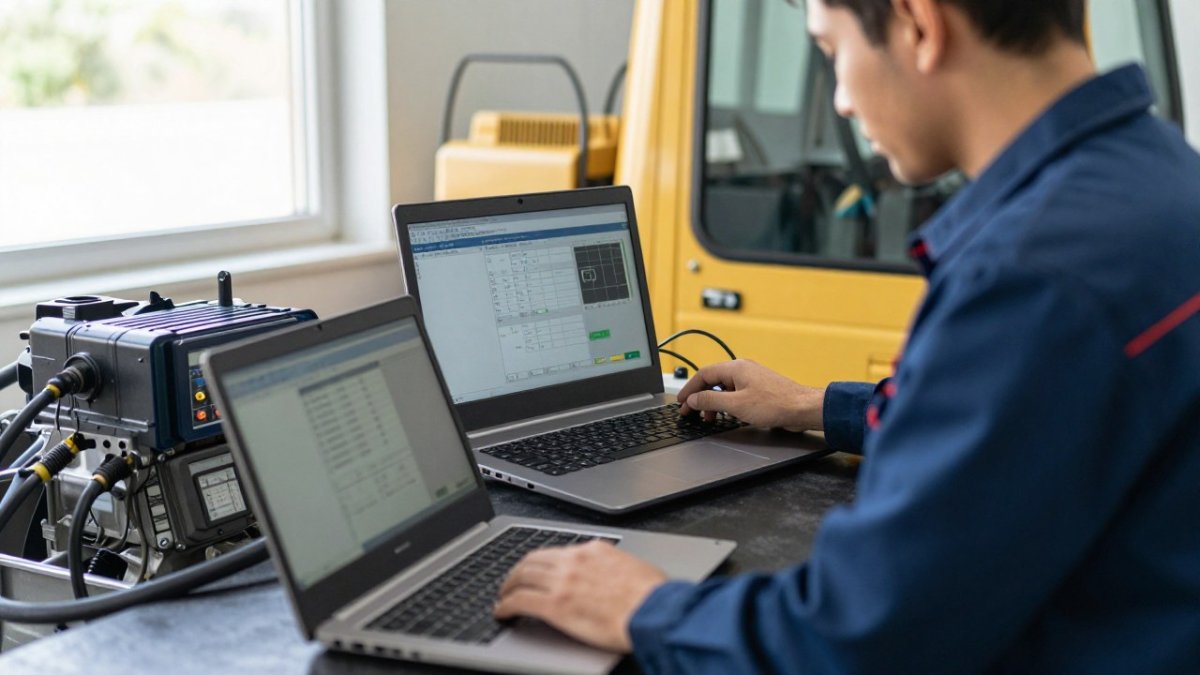
Supported engines and equipment. Diesel Spec's published materials describe heavy-duty truck and agricultural equipment tuning, with a company-reported figure of more than 50,000 engines tuned across Canada and the United States. That scope suggests a focus on on-road heavy trucks and farm machinery. Peak 8 Solutions' public content emphasizes diesel tuning guidance and diagnostic training, with its Diesel Laptops partnership pairing performance optimization with diagnostic instruction. Neither provider publishes a complete engine-family or control-module compatibility list in the sources reviewed, so ask for the exact engine makes, models, and ECM part numbers each one confirms for your equipment.
Service type. Diesel Spec is positioned around ECM tuning for heavy-duty and agricultural applications. Peak 8 Solutions combines tuning work with diagnostic training, which suits shops and technicians who want to build in-house capability rather than outsource every calibration. If your need is a one-time tune, that difference matters less; if you are equipping a service team, the training component can change the value calculation.
Module recovery and reflashing. Ask each provider whether it offers recovery of failed or bricked modules, whether it reflashes the existing ECM or supplies a replacement, and whether it preserves the original software before making changes. A provider that backs up original software and confirms a quote against the exact ECM reduces the risk of an unrecoverable module.
Ideal customer. Diesel Spec's volume claim and heavy-truck/agricultural focus suggest it is built for fleets and operators in those segments. Peak 8 Solutions' training emphasis suggests it may fit repair shops and technicians who want diagnostic skills alongside tuning. Neither profile is a substitute for confirming your specific engine and use case.
Watch out: scope claims on a website are not the same as confirmed compatibility for your equipment. Ask each provider directly which exact engine families and control modules it supports before you ship anything, and get the answer in writing against your ECM part number.
The table below summarises the four practical dimensions to check when comparing the two providers.
| Dimension | Peak 8 Solutions | Diesel Spec |
|---|---|---|
| Service focus | Diesel tuning guidance and diagnostic training | Heavy-duty truck and agricultural ECM tuning |
| Scale claim | Not published in sources reviewed | More than 50,000 engines tuned (company-reported) |
| Partnership | Diesel Laptops performance optimization and diagnostics | Not stated in sources reviewed |
| Best fit | Shops building in-house diagnostic capability | Fleets and operators in truck and farm segments |
Heavy-Duty Diesel ECM Tuning Services for Construction and Mining Fleets
Heavy-duty diesel ECM tuning services adjust the software that controls fuel delivery, timing, and boost on engines in trucks and mobile equipment. For construction and mining fleets, the usual goals are more usable power and better fuel use under load.
Construction Calibrations has offered this work since 2012 and reports that it has programmed thousands of machines. Its service includes support for more than 8,900 machines and shipping for remote operations, which matters for fleets spread across several states or abroad.
Before any calibration, confirm that the provider backs up original software and gives a confirmed quote against the exact ECM. Those two steps reduce the risk of an unrecoverable module.
ECM Reflashing vs Plug-and-Play Modules: Which Approach Fits Your Equipment
Reflashing rewrites the software inside the existing ECM. Plug-and-play modules add a separate device that alters engine behavior without changing the factory module. Each approach has a different fit.
Ag Diesel Solutions' published comparison of plug-and-play modules and ECM tuning presents plug-and-play modules as the simpler installation. That is a marketing claim, and it does not account for how the module interacts with your specific emissions hardware.
Reflashing is usually the better choice when you need calibration updates to match a replacement engine, or when your module needs recovery after a failed flash. Confirm with your provider how each option interacts with the emissions system on your equipment.
Benefits of Custom ECM Tuning for Heavy Equipment
Custom calibration can deliver more usable power and better fuel efficiency. The gains depend on the engine, the duty cycle, and the calibration itself. A fleet that runs heavy loads for long hours will see different results from one that runs light, intermittent work.
Custom tuning also helps when a replacement engine no longer matches the original software. Calibration updates let the ECM run the new hardware correctly, and recovery services can restore a module that failed during a flash or lost its software.
IBISWorld's industry report on heavy-duty diesel engine manufacturing, which projects a 4.3% compound annual growth rate for 2021 to 2026 shows steady demand for heavy-duty diesel engines, which supports the case for keeping those engines well calibrated over their service life.
Emissions Compliance, Pricing, and Turnaround: What to Verify Before You Choose
Emissions compliance is the area where a tuning change can create the most risk, and it is also where the public comparison between Peak 8 Solutions and Diesel Spec is thinnest. Neither provider's reviewed materials publish a detailed emissions-compliance statement, so buyers should treat this as a verification step rather than an assumption.
Emissions system interaction. Modern diesel engines use diesel exhaust fluid (DEF), a diesel particulate filter (DPF), and selective catalytic reduction (SCR) to meet emissions standards. US EPA guidance on diesel exhaust fluid and emissions system repair, issued August 2025 makes clear that emissions system work must follow regulatory requirements. Ask each provider how its calibrations interact with the DEF, DPF, and SCR systems on your equipment, and whether the calibration is intended for compliant on-road or off-road use. A calibration that alters emissions behavior can create legal and operational exposure, so get the answer in writing before any work begins.
Pricing. Pricing for ECM tuning depends on the module, the volume of work, and the delivery method. Construction Calibrations publishes its pricing on its website and provides a free trial and a confirmed quote for each exact ECM before shipping. The research available did not confirm current rates for Peak 8 Solutions or Diesel Spec, so request a written quote against your exact ECM part number from each provider and compare on a like-for-like basis.
Turnaround and availability. Turnaround matters most when equipment is down. Ask each provider how long a standard tune takes, how long a recovery takes, whether it can handle remote submissions, and what support hours it offers. A provider that can recover a failed module remotely may save a shipment and several days of downtime compared with one that requires the module to be sent in.
A practical verification checklist. Before choosing, confirm in writing: (1) the exact engine families and ECM part numbers supported; (2) whether the service is reflashing, a plug-and-play module, or both; (3) how original software is backed up and restored; (4) how the calibration interacts with DEF, DPF, and SCR; (5) current pricing and turnaround for your exact module; and (6) whether remote submission and recovery are available. Those six answers will separate a provider that fits your equipment from one that only looks similar on a marketing page.
Watch out: a provider that will not put emissions-compliance and module-recovery answers in writing before you ship is a provider to keep shopping past.
Choosing a Tuning Partner and Requesting a Quote from Construction Calibrations
Choose based on your equipment, your emissions requirements, and whether you need recovery as well as tuning. If you run a mixed fleet across several regions, confirm remote capability first. If a module has failed, ask whether the provider can recover it before you buy a replacement.
For a quote, contact Construction Calibrations through its website with your engine and equipment details. The team will confirm a quote against the exact ECM before anything ships.
Frequently Asked Questions
What is the difference between bench programming and plug-and-play diesel tuning?
Bench programming removes the ECM from the machine, reads the original software, backs it up, and writes a calibration to the module on a programming bench before reinstalling it. Plug-and-play modules install between sensors and the ECM and alter signals without changing the ECM software itself. Bench programming works directly on the calibration, which suits fleets that need matched engine updates and recovery of failed modules. Plug-and-play units are simpler to fit but usually offer less control over the calibration, and they can complicate troubleshooting when fault codes appear later.
How does ECM tuning affect the fuel efficiency of heavy-duty diesel engines?
ECM tuning adjusts fuel delivery, timing and torque limits within the engine's operating map. Better-matched calibrations can deliver more usable power and improve fuel use, but actual gains depend on the machine, duty cycle and how it was previously programmed. Construction Calibrations states that its calibrations aim for more usable power and better fuel use and that it provides confirmed quotes against the exact ECM before shipping. Operators should ask for the expected outcome for their specific equipment before approving work.
What should fleet managers look for when selecting an ECM tuning provider?
Look for proof of experience with your engine types, a documented process for backing up original software before any change, and confirmed quotes tied to the exact ECM. Ask about recovery of modules that failed during a flash, calibration updates for replacement engines, and how calibrations interact with existing emissions hardware. Confirm turnaround, shipping arrangements for remote equipment, and how downtime will be handled. Construction Calibrations has been in diesel tuning since 2012, and you can request a quote through its website.
How do professional tuning services differ from DIY diesel diagnostic tools?
DIY diagnostic tools read fault codes and live data, which helps identify problems but does not change the calibration. Professional ECM tuning services read and back up the original software, write custom calibrations, and recover modules that will not communicate. Professional work also includes confirming that the calibration matches the engine and emissions equipment on the machine. For fleets, the main difference is accountability: a service provider documents the work and stands behind the calibration, while a DIY tool leaves the risk with the operator.