 How-to
Heavy Equipment Engine Tuning: Fuel, Power and Uptime Benefits
Last Updated: November 10, 2026
Quick Summary
Heavy equipment engine tuning reprograms the engine control module so the engine runs closer to its designed limits, typically changing fuel burn, power output and throttle response. Results vary by machine age, duty cycle and how far the stock calibration sits from the engine's capability, so measure fuel use before and after.
- Tuning changes the lookup tables in the ECM that control fuel timing, fuel quantity and throttle response.
- Log fuel use per hour on the same task before and after tuning, under similar load and conditions.
- Reprogramming the ECM gives full calibration access, which matters for replacement engines.
- Back up the original ECM software first so the change can be reversed if needed.
- Check the equipment warranty and applicable emissions rules before ordering any tuning work.
Table of Contents
- What Heavy Equipment Engine Tuning Actually Changes
- Fuel Efficiency Gains: What the Numbers Show
- Power, Torque and Throttle Response on Demanding Work
- Reduced Downtime, Operating Costs and Return on Investment
- Risks, Warranty and Emissions Compliance to Check First
- Choosing Heavy Equipment Tuning Software and Your Next Step
- Frequently Asked Questions
What Heavy Equipment Engine Tuning Actually Changes
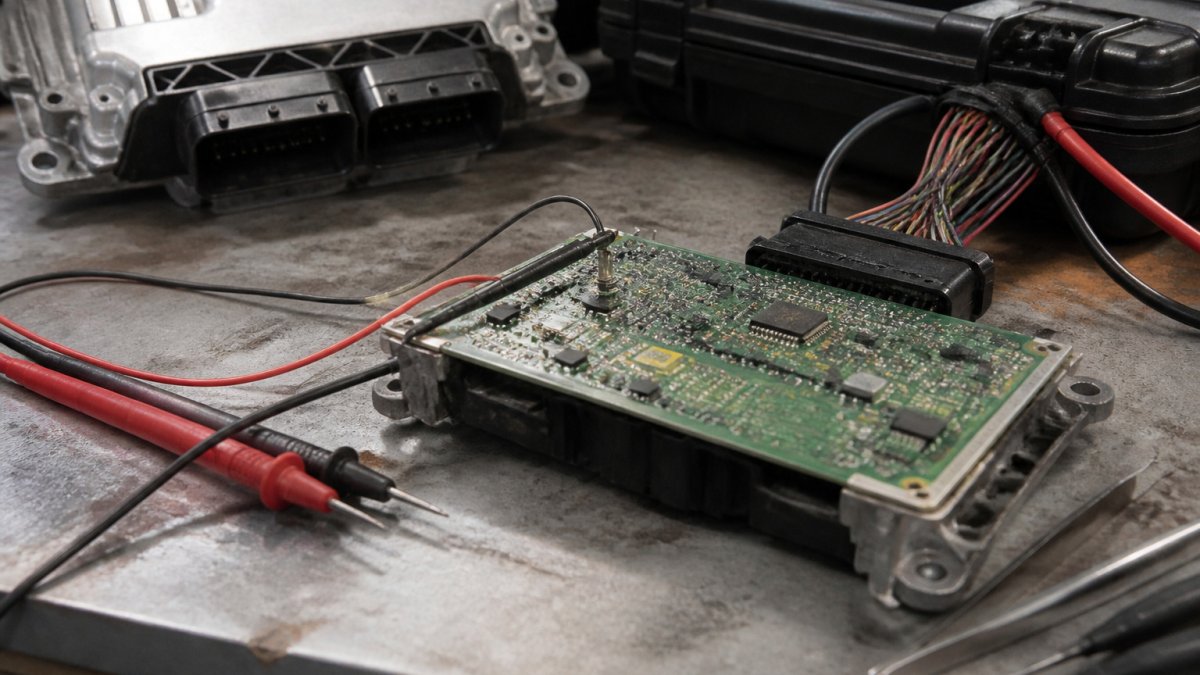
Heavy equipment engine tuning means reprogramming the engine control module (ECM) so the engine runs closer to its designed limits. Diesel ECM tuning typically changes three areas: how much fuel the engine burns, how much power it makes, and how it responds when the operator moves the throttle.
Fuel is the first place most fleet managers look. Tuning changes the timing and amount of fuel injected, and that shifts how completely the fuel burns. Power and torque follow from the same calibration. The result is a machine that does the same work with less wasted effort.
The gains are real but they are not uniform. A machine that already runs its stock calibration well will see smaller changes than one with a worn injector or a mismatched replacement engine. Treat the stock calibration as the baseline and measure against it.
How ECM Tuning Works on Diesel Engines
The ECM is a small computer that reads sensors (air temperature, boost pressure, engine speed, throttle position) and decides how much fuel to inject and when. Tuning means changing the lookup tables that drive those decisions.
At Construction Calibrations, every job starts with a backup of the original software. We read the module, save the factory file, then write the new calibration. Keeping the original file means the change can be reversed if the machine needs to return to stock.
Most tuning work is done on the bench or through a secure connection, not by guessing at settings on the machine. A confirmed quote is issued against the exact ECM before any file is shipped, so the scope of work is clear before the module is touched.
ECM Tuning vs. a Plug-and-Play Performance Module
A plug-and-play module sits between the sensors and the ECM and alters signals. It is quick to install but limited, because it cannot change the internal calibration tables.
Reprogramming the ECM itself gives access to the full calibration. That matters for fleets running replacement engines, because a replacement often needs its calibration updated to match the new hardware. A plug-and-play module rarely solves that.
For a single machine with simple goals, a module may be enough. For a fleet that needs consistent results and a clean record of what was changed, ECM reprogramming is usually the better path.
Fuel Efficiency Gains: What the Numbers Show
Fuel is the biggest operating cost for many heavy machines, so most fleet managers start here. If you run Kubota equipment, first check which tuning options Kubota Construction machines support. The industry gives a useful baseline.
Tuning works within the hardware an engine already has. The real gain on any given machine depends on its age, duty cycle, and how far the stock calibration is from the engine's capability. Expect a range, not a fixed number, and measure your own fleet before and after.
A simple way to measure:
- Log fuel use per hour on the same task before tuning
- Record the same task after tuning, under similar load and conditions
- Compare liters per hour or gallons per shift, not single-day readings
- Keep the logs for the full warranty period
The article suggests measuring your own fleet before and after tuning, using a simple logging method.
| Step | What to do | Timing |
|---|---|---|
| Log baseline | Record fuel use per hour on the same task before tuning | Before tuning |
| Log after | Record the same task under similar load and conditions | After tuning |
| Compare | Compare liters per hour or gallons per shift, not single-day readings | At comparison |
| Keep records | Keep the logs for the full warranty period | Full warranty period |
Power, Torque and Throttle Response on Demanding Work
Power and torque matter most when a machine is working hard: lifting a full bucket, climbing a grade, or pushing through dense material. A tuned calibration can raise the torque curve in the working range, so the engine pulls harder before the governor or the load pulls it down.
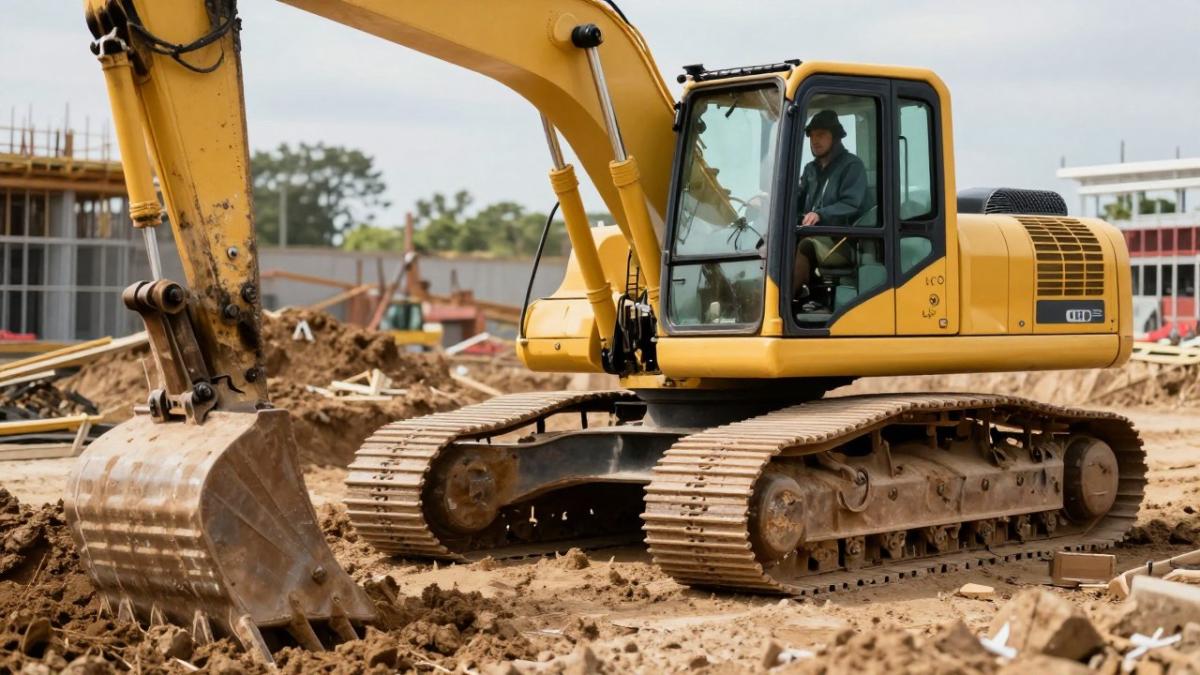
The mechanism is worth understanding because it explains both the gain and the risk. Compare tuning options for Powerscreen equipment before you choose a calibration. The ECM decides how much fuel to inject and when, based on sensor inputs like boost pressure, air temperature, engine speed, and throttle position.
Equipment type changes what "usable power" means:
- Excavators and loaders benefit most from mid-range torque and fast throttle response, because the work is cyclical, dig, lift, swing, dump, and hesitation at the start of each cycle costs time. A calibration that sharpens response in the 1,200-1,800 rpm band is usually more valuable than a peak-power increase the operator rarely reaches.
- Tractors and harvesters often run at fixed engine speeds for PTO or hydraulic work, so steady-state torque and fuel stability matter more than snap response. Field work also exposes heat management problems quickly, so any calibration should be checked against sustained-load temperatures, not just a short pull.
- Graders, dozers, and compactors spend long hours at part load. Gains there come from smoother torque delivery and better part-throttle fueling rather than headline horsepower.
Watch out: more fuel per cycle means more heat and more stress on components, so a calibration that raises torque without matching the cooling system, injector condition, and duty cycle can shorten component life even while it feels stronger on the first day.
A practical way to judge a power calibration before committing is to ask what the provider changes and how they verify it. Good practice is to log baseline data, boost, fuel rate, exhaust temperature, and load, then compare after the change under the same conditions. If a provider cannot describe how they validate the calibration against your duty cycle, treat the power claim as unproven.
Reduced Downtime, Operating Costs and Return on Investment
Downtime is often more expensive than fuel. A machine sitting idle with a faulty ECM can cost far more in lost production than the tuning or recovery job itself. Construction Calibrations offers ECM recovery for modules that failed during a flash or lost their software, and calibration updates for replacement engines.
A module that will not communicate after a failed flash does not always have to be replaced. You can check tuning and recovery options for Cummins engines before deciding. It is worth asking for a confirmed quote on your own ECM before deciding to replace it.
To judge return on investment, add up:
- Fuel saved per year, based on your logged hours
- Downtime avoided, multiplied by your hourly cost of an idle machine
- The cost of the tuning or recovery job
- Any replacement part cost you avoid
If the savings exceed the job cost within a reasonable period, the job pays for itself. Confirm pricing directly with Construction Calibrations, since pricing depends on the module, the work required, and delivery.
Risks, Warranty and Emissions Compliance to Check First
Tuning carries real risks, and they should be checked before any work is ordered. Tuning can affect an equipment warranty or emissions compliance. Check your warranty terms with the equipment dealer first.
Emissions rules matter too. The U.S. Environmental Protection Agency publishes regulations for nonroad compression-ignition engines used in heavy equipment. Any calibration change needs to be reviewed against the rules that apply to your engine and your jurisdiction. Compliance is the owner's responsibility, so confirm the requirements for your machine before work begins.
Watch out: an emissions-related calibration that disables required monitoring can leave a machine out of compliance even if it runs better. Ask for the scope of changes in writing.
A practical checklist before ordering:
- Read the equipment warranty terms
- Confirm which emissions standard the engine must meet
- Ask whether the calibration keeps emissions hardware active
- Keep the original software file for reversal
Choosing Heavy Equipment Tuning Software and Your Next Step
When you compare heavy equipment tuning software or services, the useful comparison is not the feature list, it is the process behind the file. A provider that can walk you through a repeatable sequence is usually a safer bet than one that sells a calibration by horsepower number alone. A common pattern among experienced tuners looks like this:
- Baseline diagnostics. Read fault codes, check sensor health, confirm injector condition, and verify the ECM is communicating cleanly. Tuning a machine with an existing fault usually makes the fault worse, not better.
- Data collection. Log the machine under its real duty cycle, load, boost, fuel rate, exhaust temperature, engine speed. This is the reference the new calibration will be judged against.
- Calibration. Back up the original software, then write the new file. The backup is what makes the change reversible.
- Testing. Run the machine under the same conditions as the baseline and compare the logs. Look for gains in the working range, not just a peak number.
- Verification. Confirm no new fault codes, check temperatures under sustained load, and keep the logs for the warranty period.
Ask each provider which of these steps they perform and what evidence they give you at the end. If you run industrial marine or generator engines, see whether tuning is available for Volvo Penta Industrial engines.
Eco tuning and performance tuning are not the same goal. Eco-focused calibrations prioritize fuel use, while performance calibrations prioritize power. Decide which one your fleet needs before you talk to a provider, because the two pull the calibration in different directions.
Watch out: a calibration that disables emissions monitoring or bypasses a sensor can look like a clean tune in the short term but leave the machine out of compliance and harder to diagnose later. Ask for the scope of changes in writing, including anything that affects emissions hardware.
Construction Calibrations supports 8,900+ machines and offers global shipping, so distance is not a barrier. Get a quote for your specific ECM and equipment: send the module details and the job you need done, and you will get a confirmed quote before anything ships.
Get a quote
Is your fleet losing fuel or sitting idle because of a module problem? Construction Calibrations provides confirmed ECM tuning, reflashing, and recovery for heavy equipment, with original software backed up before any change.
Frequently Asked Questions
What are the benefits of tuning a heavy equipment engine?
Engine tuning on heavy equipment typically aims at more usable power and torque, smoother throttle response, and better fuel use under load. The gains depend on the machine, the engine and the duty cycle, so they should be verified against baseline data from your own fleet rather than assumed. Tuning can also help recover modules that failed during a flash or lost software, and it can align calibrations with replacement engines. Construction Calibrations can confirm the expected changes for your specific ECM before any work starts.
Can ECM tuning improve fuel efficiency in heavy equipment?
It can, but the size of the improvement varies by machine and by how the equipment is used. Fuel-efficiency gains from newer equipment generations come mainly from engine and drivetrain design rather than individual ECM tuning. For a realistic estimate on a specific Caterpillar or Komatsu machine, compare fuel consumption logs before and after a calibration over comparable work.
Does tuning affect a machine's warranty or emissions compliance?
It can. Tuning may affect manufacturer warranty coverage and may cause emissions-test problems if calibrations change how the engine meets its certification. Nonroad diesel engines used in heavy equipment fall under U.S. EPA emissions regulations, so any calibration should be reviewed against those rules and against your warranty terms before it is installed. Ask your tuning provider how they preserve original software and how they handle emissions hardware.
How does heavy equipment ECM tuning work?
The engine control module holds the calibration tables that govern fuel delivery, timing, boost and other parameters. A tuning provider reads the existing software, backs it up, then modifies or replaces the calibration and writes it back to the module, often on the bench. Confirmed quotes against the exact ECM before shipping and preserving the original software are two practices that reduce risk on a job like this.