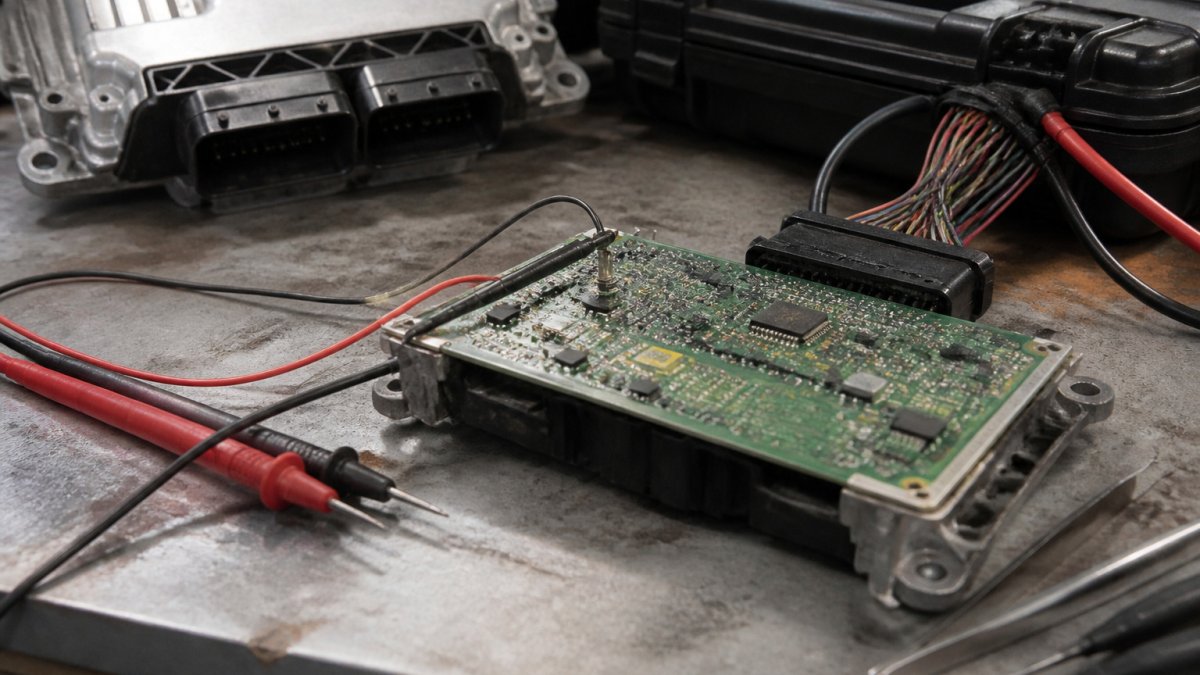
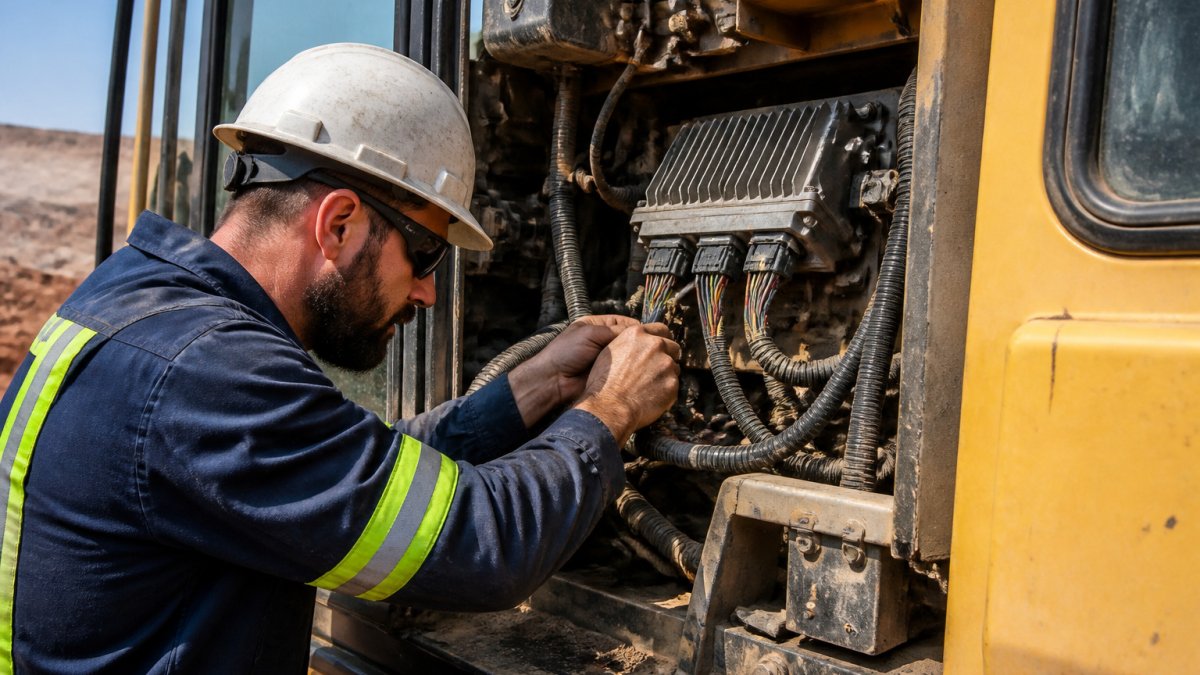
 How-to
How to Recover an ECM Remotely for Mining Fleets
Quick Summary
Remote ECM recovery restores or reprograms a failed engine control module without shipping it or sending a technician to the machine. Original software is backed up first, so recovery starts from a known-good state. It works best when the fault is in software rather than hardware.
- Remote recovery suits software faults, such as an interrupted flash or wrong software version, not physical damage.
- Confirm the module communicates with the diagnostic tool before attempting any recovery.
- Keep battery voltage stable with a charger or power supply so a flash cannot be interrupted.
- Test the connection under load before flashing, and prefer a wired or site-network link over cellular.
- Stop and escalate if the same fault returns after two failed attempts.
Table of Contents
- Why Mining Fleets Lose Equipment to ECM Failures
- What Remote ECM Recovery Involves for Heavy Equipment
- Tools, Software and Connectivity You Need Before Starting
- Step-by-Step Remote ECM Fault Diagnosis and Recovery
- Stage 1: Capture the symptom and fault codes before touching anything
- Stage 2: Separate communication faults from software and hardware faults
- Stage 3: Confirm remote recovery is appropriate
- Stage 4: Back up, then restore or reprogram
- Stage 5: Post-recovery validation
- Stage 6: Decide whether to close or escalate
- Cutting Mining Equipment Downtime With Faster Module Recovery
- ECM Recovery vs. Replacement: How to Decide
- Post-Recovery Validation and Preventing Repeat Failures
- Requesting a Remote Recovery Quote for Your Fleet
- Frequently Asked Questions
Why Mining Fleets Lose Equipment to ECM Failures
Last Updated: October 30, 2026
When a haul truck goes dead in the middle of a shift, the engine control module (ECM) is often the reason. Owners running Bell Equipment machines can find brand-specific ECM service for their own equipment.
Mining operations face a particular problem. Sites are often far from dealer service centers, and a failed module can mean days of waiting for a replacement and a technician. Operators at mine sites in South Africa can look up local ECM recovery support to shorten that wait.
Common causes of ECM failure and unresponsiveness
ECM problems usually come from a handful of sources:
- Interrupted software flashes: Power loss or a dropped connection during reprogramming can leave a module unable to boot.
- Mis-programmed modules: Incorrect calibration files or a wrong software version can cause erratic running or no-start conditions.
- Electrical faults: Voltage spikes, corroded connectors, and harness damage can make a module stop communicating.
Knowing the likely cause shapes the recovery approach. A module that only lost its software can often be restored. A module with failed hardware may need replacement.
What Remote ECM Recovery Involves for Heavy Equipment
Remote ECM recovery means restoring or reprogramming a module without shipping it or sending a technician to the machine. Original software is backed up before any change is made, so the recovery starts from a known-good state.
The process generally covers three things: confirming what the module is and what state it is in, restoring or reprogramming its software, and checking that the machine runs correctly afterward. Because the work is done remotely, the machine's operator or on-site technician needs to handle the physical connection and power, while the programming team handles the software side.
Remote work is not right for every case. A module with physical damage still needs to be inspected in person or replaced. Remote recovery works best when the fault is in the software, not the hardware.
Tools, Software and Connectivity You Need Before Starting
Remote ECM recovery only works when the physical setup, the software, and the connection all hold at the same time. Most failed remote sessions fail on one of these three, and connectivity is the most common culprit on remote mine sites.
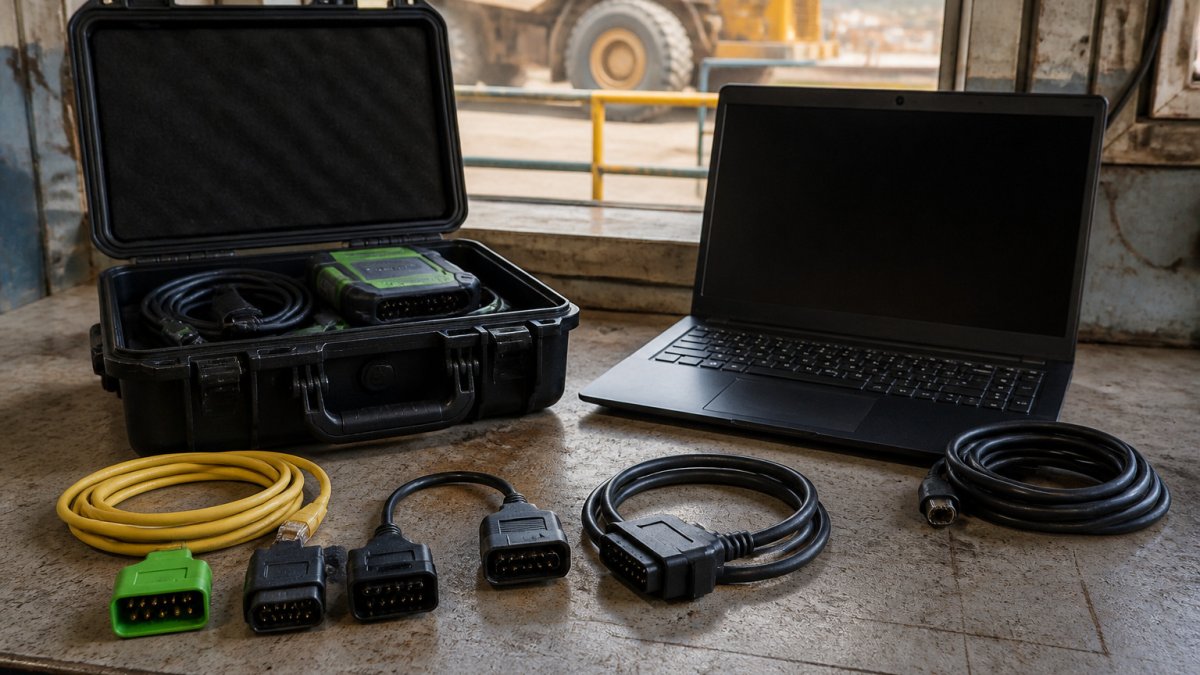
Diagnostic hardware and software
- A diagnostic interface that supports the specific ECM make and model on the machine, not a generic OBD-style adapter
- A laptop with the OEM programming software, drivers, and the correct software/calibration files for that ECM part number
- A stable power supply for the laptop and the diagnostic interface, plus a charger or power supply on the machine so battery voltage does not sag mid-flash
Connectivity requirements for remote mine sites
Mine sites rarely offer the stable, high-bandwidth link a programming session assumes. Plan for that before the session, not during it:
- Test the link before the flash. Run a short diagnostic session first to confirm the connection holds under load, not just at idle.
- Prefer a wired or site-network connection over a cellular hotspot where one is available; cellular signal at a pit or workshop can drop without warning.
- Have a fallback path, a second connection method or a known-good location, so a dropped link does not strand a partially flashed module.
Secure remote access and access control
Remote programming touches a machine's control system, so access must be controlled the same way any other site IT access is:
- Encrypted connections between the on-site laptop and the remote programming team
- Named user accounts and authentication rather than shared credentials, so every session is attributable
- Site-approved access rules set by the mine's IT or OT team, including which machines and which modules can be reached remotely
Site rules and isolation before connection
Before any remote session begins, confirm the machine is parked safely, secured, and isolated according to site rules, and that the on-site technician knows how to disconnect power and the diagnostic link immediately if something goes wrong. Remote recovery does not remove the need for lockout and isolation discipline, it depends on it.
Step-by-Step Remote ECM Fault Diagnosis and Recovery
A structured approach prevents small faults from becoming bigger ones. The workflow below is the sequence most field teams follow when attempting a remote recovery; each stage has a clear exit point so a recoverable module is not pushed into an unrecoverable state.
Stage 1: Capture the symptom and fault codes before touching anything
Start by recording what the machine is doing and what the module is reporting. Capture:
- Active and stored fault codes from the dash or the service tool, written down exactly as displayed
- The symptom, no-start, crank-no-run, rough running, derate, or no communication with the service tool
- When it began, after a flash, after a repair, after a jump-start, or with no obvious trigger
This record is your baseline. Without it, a failed recovery attempt leaves you unable to tell whether the module changed state or the original fault was simply never understood.
Stage 2: Separate communication faults from software and hardware faults
Sort the problem into one of three groups before attempting any recovery:
- Communication failure: The module does not respond to the diagnostic tool at all. Check battery voltage at the ECM connector, the main grounds, the data-link wiring, and connector seating first. A module that is not powered or not on the data bus cannot be flashed, and attempting it wastes a recovery window.
- Software fault: The module responds, but runs incorrectly, reports calibration or checksum errors, or fails to boot after an interrupted flash. This is the strongest candidate for remote reprogramming.
- Hardware fault: Burn marks, moisture ingress, repeated failures after a clean flash, or a module that drops offline under vibration or heat. Stop here and plan for inspection or replacement.
Stage 3: Confirm remote recovery is appropriate
Before the programming team connects, confirm all of the following:
- The module communicates with the diagnostic tool
- Battery voltage is stable and a charger or power supply is connected so a flash cannot be interrupted by a voltage drop
- The site has a connection that can hold through the full flash, not just the first few minutes
If any of these cannot be confirmed, the correct decision is to pause rather than proceed.
Stage 4: Back up, then restore or reprogram
The programming team backs up the current module state before any change, then restores the known-good software or applies the correct calibration for the machine and engine configuration. The on-site technician's job during this stage is narrow but critical: keep power stable, keep the connection alive, and report immediately if either drops.
Stage 5: Post-recovery validation
A recovered module is not finished until the machine proves it runs correctly. After the flash:
- Clear codes and re-read them after a run cycle
- Confirm the engine starts reliably and runs smoothly across its load range
- Check that the reported software and calibration versions match what was intended
Stage 6: Decide whether to close or escalate
If the machine runs clean, close the job and log the fix. If the same fault returns, or a new fault appears that was not present before, stop and escalate rather than repeating the flash. Two failed attempts with the same result is the common trigger for bringing in a technician or ordering a replacement.
The recovery workflow runs in six stages, each with a clear exit point, so a recoverable module is not pushed into an unrecoverable state.
| Stage | What to do | Exit point |
|---|---|---|
| 1. Capture symptom | Record fault codes, symptom, when it began, and module identifiers | Baseline recorded before touching anything |
| 2. Sort the fault | Classify as communication, software, or hardware fault | Hardware fault means stop and plan inspection |
| 3. Confirm suitability | Check voltage, connection, correct file, and machine isolation | Any unconfirmed item means pause |
| 4. Back up and restore | Back up current state, then restore or reprogram | Keep power stable and connection alive |
| 5. Validate | Clear codes, run a cycle, confirm versions and smooth running | Record result and software version |
| 6. Close or escalate | Close the job if clean; escalate if the fault returns | Two failed attempts triggers escalation |
Cutting Mining Equipment Downtime With Faster Module Recovery
Downtime is expensive, and a failed module can idle a machine for days if the only option is replacement. Recovering the existing module, when it is safe to do so, can get a machine back to work sooner. Construction Calibrations can provide a confirmed quote against the exact ECM before any shipping, so decisions are made with clear information.
ECM Recovery vs. Replacement: How to Decide
The choice between recovering and replacing a module comes down to the cause of the fault and the cost of waiting.
Recovery usually makes sense when: Operators of Liebherr heavy equipment can review the brand-specific ECM service page to compare the options for their machines.
- The module communicates but runs the wrong software
- The fault follows a failed or interrupted flash
- The hardware shows no physical damage
Replacement is usually the better path when:
- The module shows hardware damage or failed after a clean flash
- Recovery attempts have failed repeatedly
- The module is an older unit where replacement is more reliable
When you are unsure, ask for a diagnosis first. Confirming the fault type before committing to either path avoids wasted time and money.
Post-Recovery Validation and Preventing Repeat Failures
A recovered module is not finished until the machine proves it runs correctly. After a recovery, check that the engine starts reliably, runs smoothly across its load range, and shows no active fault codes. Record the results so there is a baseline for future comparison.
Preventing repeat failures takes a few habits:
- Keep stable power during every flash and reprogramming session
- Store original software backups so a known-good version is always available
- Match calibrations to the exact engine and emissions hardware
Calibrations that work with existing emissions hardware keep the machine compliant and reduce the chance of new faults appearing after recovery.
Requesting a Remote Recovery Quote for Your Fleet
If your fleet is facing an ECM problem, the fastest next step is a clear diagnosis and a confirmed quote. Construction Calibrations provides ECM services for heavy equipment across construction, mining, agriculture, and forestry, including international fleets.
To get started, gather the machine serial numbers, the fault codes and symptoms, and the module details. Then request a quote. Construction Calibrations can review the case before any work begins.
Frequently Asked Questions
What is ECM recovery for heavy equipment?
ECM recovery is the process of restoring a heavy equipment engine control module that has failed, lost its software, or been mis-programmed so the machine can run again. It usually involves reading the module's data, reloading the original or corrected software, and confirming the calibration matches the engine and emissions hardware. Construction Calibrations backs up original software before any change and provides a confirmed quote against the exact ECM before shipping. Pricing depends on the module, the work required and delivery, so check the Construction Calibrations website or request a quote for current figures.
Can a mining equipment ECM be recovered remotely?
Some ECM recovery and reprogramming work can be carried out without shipping the module to a workshop, provided the module can still communicate and the required connectivity and secure access are in place. Remote work is not possible for every failure, particularly modules that no longer respond at all, which often need bench programming. Construction Calibrations supports remote calibration and recovery for fleets spread across multiple states and international sites. Contact the company to confirm whether a specific module is suitable for remote work.
What causes an ECM to fail or become unresponsive?
Common causes include interrupted or failed software flashes, power loss during programming, corrupted calibration files, and mis-programming when a replacement engine is fitted without a matching calibration. Electrical faults and harness problems can also make a module appear dead when the fault is in the wiring. Early triage should separate a communication fault from a software fault before any reprogramming is attempted. Working with a specialist who keeps original software backups reduces the risk of making an already difficult recovery worse.
When should an ECM be recovered instead of replaced?
Recovery is usually the better option when the module is physically intact and the fault is in its software or calibration, because it avoids the cost and lead time of a new unit. Replacement becomes more sensible when the hardware itself is damaged, when the module cannot be recovered after triage, or when it has reached the limits of recovery for that part. Comparing the expected recovery cost and downtime against the price of a new module gives a practical decision point. Construction Calibrations provides confirmed quotes against the exact ECM so fleet managers can compare options before committing.
Get a quote from Construction Calibrations to start your remote ECM recovery. For current pricing, see the Construction Calibrations website or request a quote directly.